
Somalia continues to face a worsening humanitarian crisis driven by recurrent drought, climate shocks, rising food prices, and declining humanitarian funding. According to the latest IPC analysis, an estimated 6.5 million people were experiencing crisis-level food insecurity or worse, with communities in Baidoa, South West State, among the hardest hit. Water shortages, shrinking livelihoods, and prolonged dry conditions left many displaced and vulnerable families struggling to access safe water, food, and other essential services.
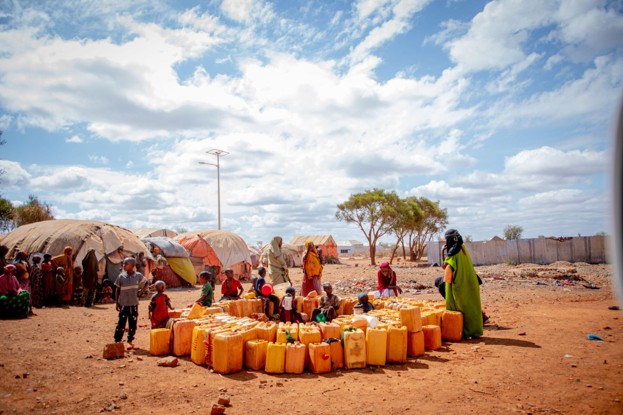 Emergency Water Support Reaches Drought-Affected Households
To help communities cope with the worsening drought, GREDO, through the Somali Joint Response (SomJR) Project, implemented a Crisis Modifier response in partnership with Oxfam Novib and with funding from the Dutch Relief Alliance (DRA). The intervention provided an integrated package of emergency WASH and Multi-Purpose Cash Assistance (MPCA), enabling vulnerable households to meet their most urgent needs while protecting their dignity.
Between April and May 2026, the response targeted households most affected by the drought, including newly displaced families and vulnerable residents within the project’s target locations.
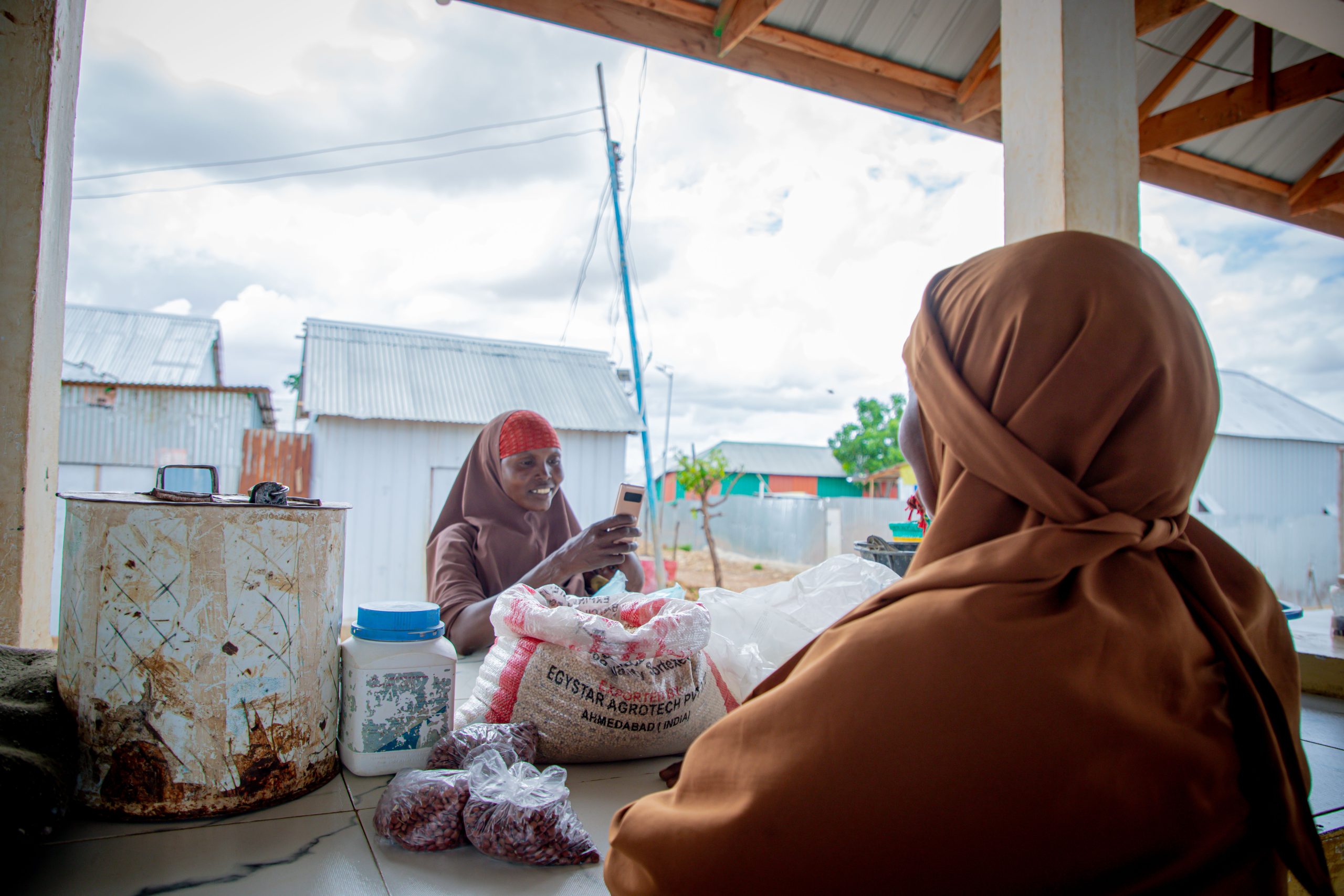
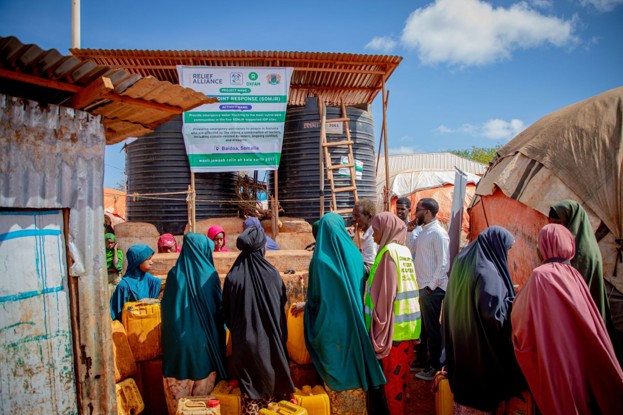 Women accessing safe water at a water kiosk.
A total of 310 households received Multi-Purpose Cash Assistance, with each household receiving US$100 per cycle for two consecutive months. The flexible cash support enabled families to purchase food, water, healthcare, and other basic necessities according to their most urgent priorities.
At the same time, 600 households benefited from emergency water trucking, receiving safe water at 45 litres per household per day during one of the most severe periods of water scarcity. Together, these interventions helped reduce immediate humanitarian needs while strengthening household resilience during the crisis.
Among those reached was Isho Mohamed Yarow, a 45-year-old mother of seven living in Idaale-1 IDP Camp. She fled Haggarka Village, approximately 35 kilometres west of Baidoa, after prolonged drought destroyed her family’s livelihood and left them unable to cope.
Like many displaced women, Isho faced the daily challenge of finding enough water while struggling to feed and care for her children.
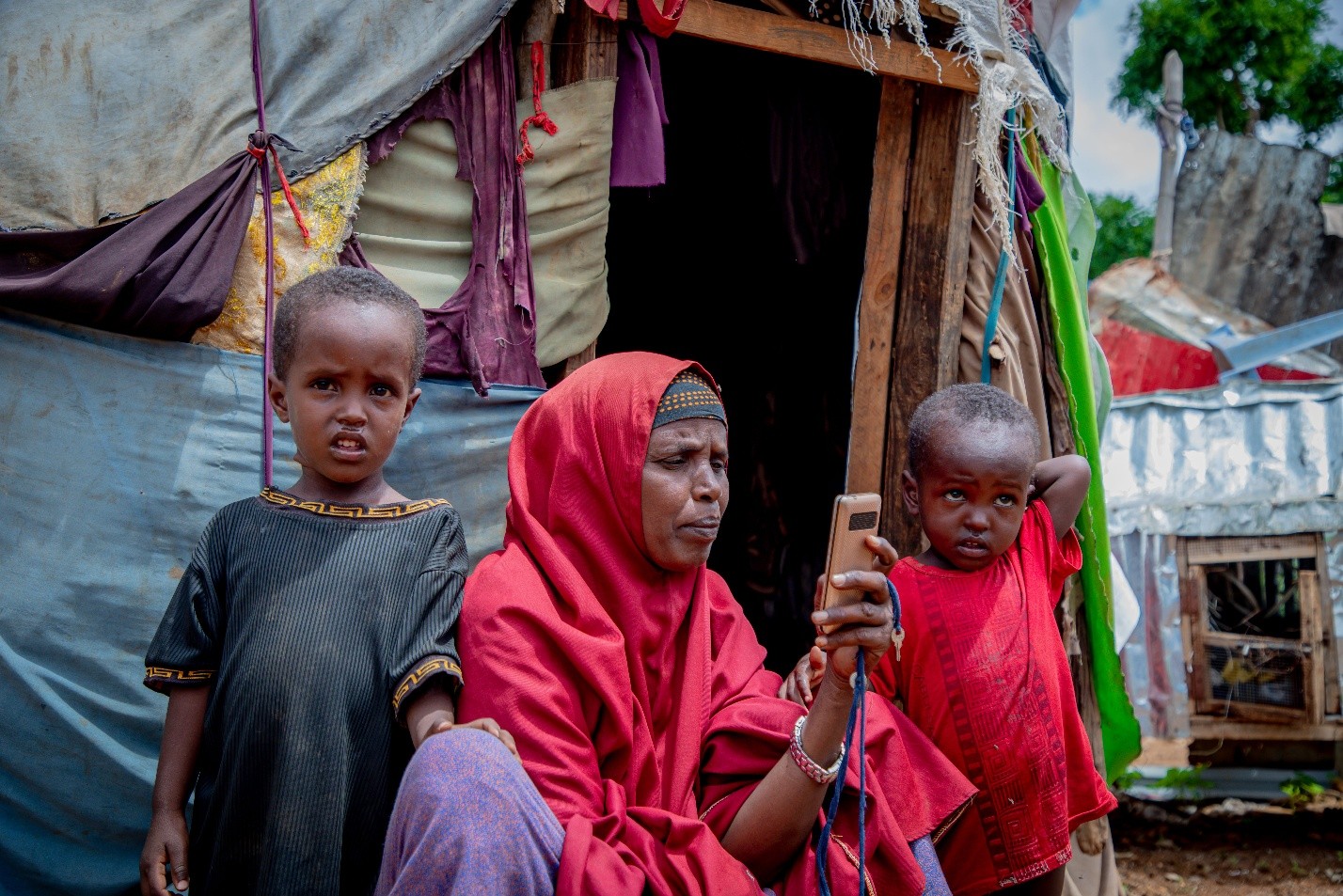 Isho Yarow Abdi and her children at their shelter in Idaale-1 IDP Camp.
“Before receiving this support, life was extremely difficult for my family. As the drought worsened, finding water became a daily struggle, and there were days when I worried about how I would feed my children. We had lost our means of coping, and every day brought new challenges. The cash assistance helped us buy food, water, and other essential household items, while the water trucking ensured that our community had access to safe water nearby. This support arrived when we needed it most. It eased our suffering, restored our dignity, and gave us hope that we could overcome this difficult period.” Isho Mohamed
Her story reflects the experiences of many drought-affected families across Baidoa, where women and children often bear the greatest burden of water shortages and food insecurity. For households already living in displacement, timely humanitarian assistance can make the difference between survival and further hardship.
The Crisis Modifier response combined emergency water supply with flexible cash assistance, allowing families to address their immediate priorities while reducing the pressure created by prolonged drought. This integrated approach provided practical, people-centred support that responded to the interconnected challenges of water scarcity, food insecurity, and household vulnerability.
The intervention also demonstrates the importance of acting early. Rapid humanitarian assistance helps vulnerable households protect their livelihoods, avoid harmful coping strategies, and recover more quickly before conditions deteriorate further.
“The Crisis Modifier response allowed us to act quickly when drought conditions worsened in Baidoa. By combining water trucking with Multi-Purpose Cash Assistance, we were able to provide timely, dignified, and practical support to highly affected households, including new arrivals and vulnerable families already living in project sites.” Adan Yussuf – WASH and Livelihood Coordinator
The Crisis Modifier response in Baidoa demonstrates how timely, integrated humanitarian action can help communities withstand climate shocks and protect lives. By providing safe water alongside flexible cash assistance, the project enabled vulnerable families to meet their immediate needs, preserve their dignity, and strengthen their ability to cope during one of the most challenging periods of the drought.
As climate-related emergencies continue to affect Somalia, investing in early, community-led responses remains essential to saving lives, protecting livelihoods, and building resilience for the future.