
Fardowsa’s Triplets and the Return of Maternity Care in Burhakaba Through restored maternal and newborn healthcare services at Waberi Health Centre, Fardowsa received care during pregnancy, delivered her triplets and continued receiving support at home.
Waberi Village, Burhakaba District, Bay Region, Somalia
For Fardowsa Hassan Manur, 35, access to maternal healthcare close to home was essential. Living in Waberi village in Burhakaba district, she and her husband, Omar Hussain, were already caring for seven children before her latest pregnancy. With her husband working as a security guard to support their large household, paying for private maternity care and unexpected medical expenses would have been difficult.
Fardowsa was familiar with Waberi Health Centre, having previously received maternal and child healthcare services through a BHA–USAID-supported programme. However, when the funding ended in March 2024, maternity services at the centre stopped, leaving families with fewer affordable healthcare options.
Services resumed in May 2026 through the ECHO-funded SHIP-2 project, implemented by GREDO in partnership with World Vision International.
During her pregnancy, Fardowsa returned to Waberi Health Centre for her third and fourth antenatal care visits. Health workers monitored her condition and blood pressure, provided tetanus vaccination and offered guidance on nutrition, preparing for childbirth and recognising warning signs.
Welcoming three newborns
On 12 September 2026, when labour began, Fardowsa went to Waberi Health Centre without knowing she was carrying triplets. After the first baby was born, the midwife recognised that two more babies were coming and helped her deliver all three: Mahir, Maria and Maida. With their arrival, Fardowsa became a mother of ten.
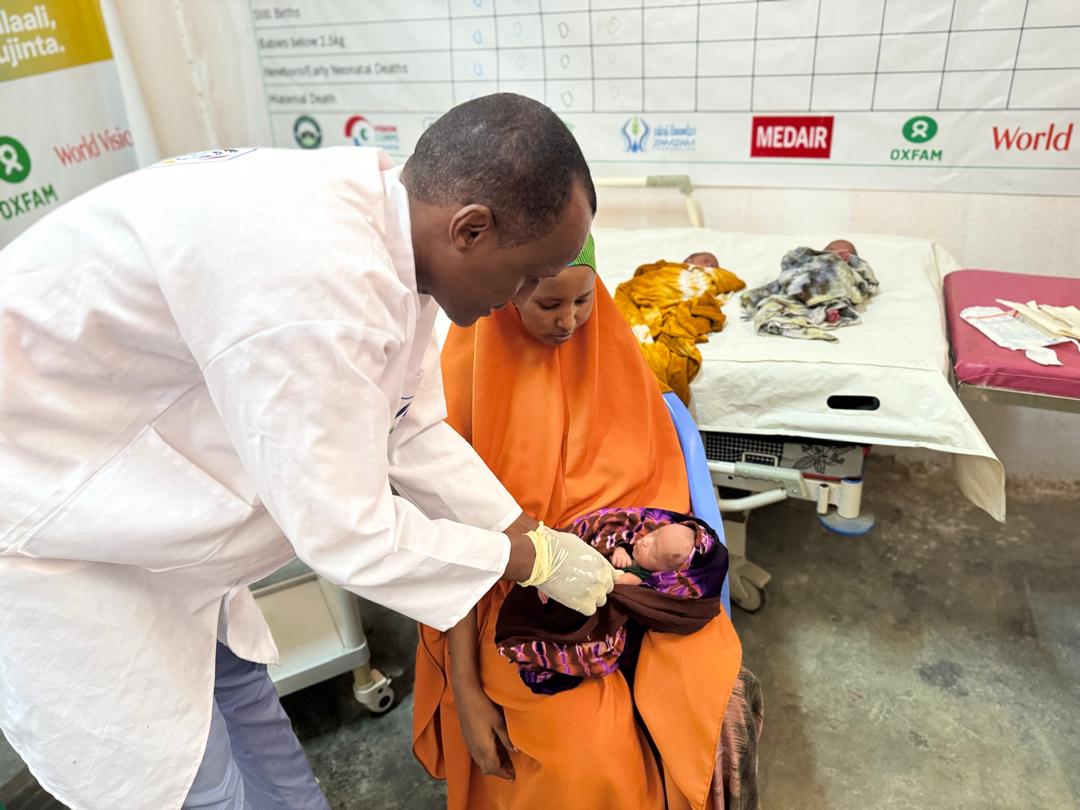 Fardowsa holds one of her newborn triplets while the other two lie beside her following their birth at Waberi Health Centre. 12 September 2026. © GREDO
She and her newborns remained at the health facility for approximately 24 hours after delivery. Health workers monitored her recovery and checked each baby for feeding difficulties and signs of illness. They also supported warmth, early feeding and safe cord care.
Before discharge, the newborns received BCG and their first oral polio vaccinations. Fardowsa also received advice on recovery, nutrition, hygiene and breastfeeding, including when to seek further medical attention.
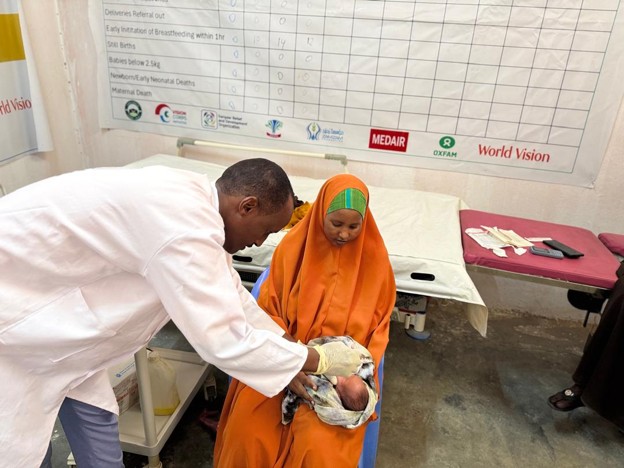 GREDO health worker administers BCG and OPV0 vaccines to one of Fardowsa’s triplets at Waberi Health Centre. 13 September 2026. © GREDO
Reflecting on the moment she first saw her three newborns, Fardowsa shared:
“When they placed all three babies beside me, I was exhausted and could hardly speak. I kept looking at them and thanking Allah. I was relieved that Mahir, Maria and Maida were alive and that the midwives were still beside me.”
For the midwife who assisted with the delivery, the experience highlighted the importance of having maternity services available within the community.
“A triplet delivery demands close observation, teamwork and readiness to act quickly. When Fardowsa and all three newborns were stable, the whole team felt the weight of the moment. We were happy not only because the delivery went well, but because maternity care was available again for a mother in our own community.” — Zahra Adan Kerow, Qualified GREDO Midwife, Waberi Health Centre
Continuing care at home
Caring for three newborns brought additional demands, even for an experienced mother. After leaving the health centre, Fardowsa continued receiving support through home visits from GREDO midwives and infant and young child feeding (IYCF) staff twice a week.
During these visits, the team helped her position the babies and attach them to the breast, provided counselling on exclusive breastfeeding and hygiene, and explained how to recognise newborn danger signs.
The visits also included guidance on maternal nutrition, personal and household hygiene, and recognising signs of illness in the newborns. This practical support helped Fardowsa care for her triplets alongside her other children.
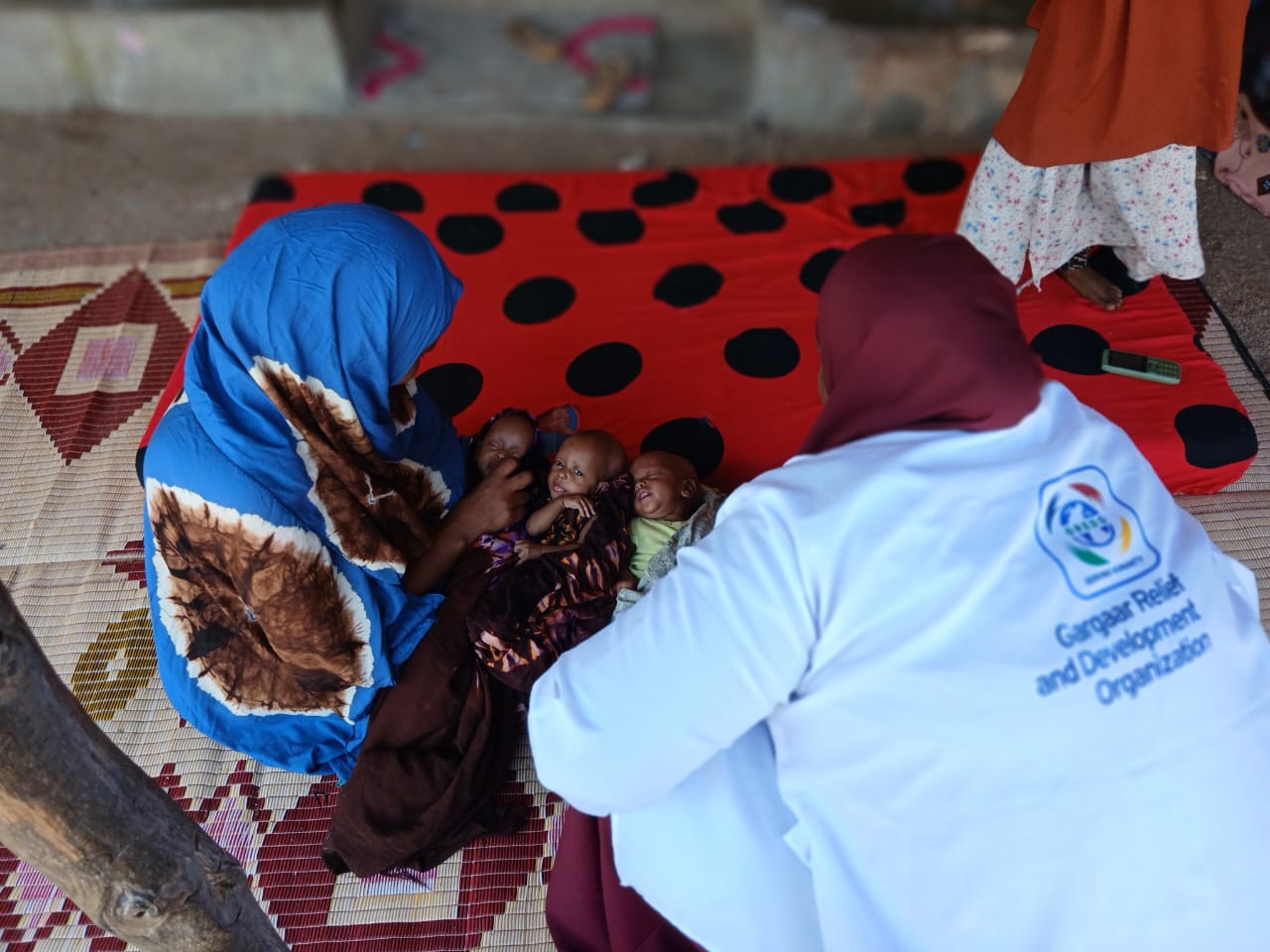
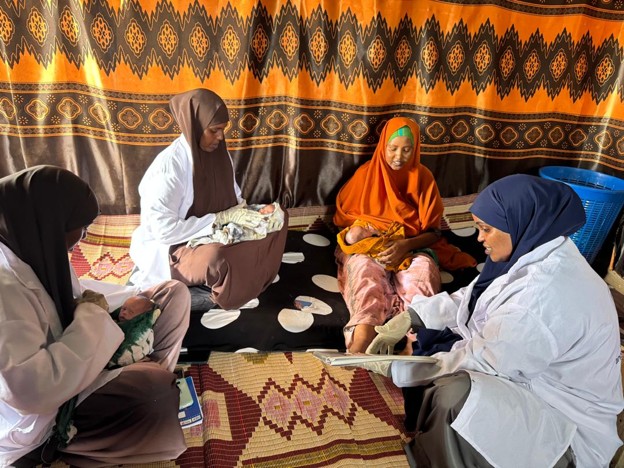 Fardowsa with her triplets during a postnatal home visit in Waberi village. GREDO health workers provide breastfeeding support and newborn care guidance. 20 September 2026. © GREDO
Restoring access to essential maternal and newborn healthcare
Through the ECHO-funded SHIP-2 project, GREDO restored maternal and newborn healthcare services at Waberi Health Centre in May 2026.
The project supports maternal, newborn and child healthcare, nutrition services, vaccination, health education, referrals and follow-up. It is implemented by GREDO in partnership with World Vision International in Burhakaba and Qansaxdheere.
Running from May 2026 to April 2027, the project provides integrated health and nutrition services for crisis-affected families through health facilities, outreach and community-based support.