
How a displaced mother in Baidoa rebuilt her life through resilience, determination, and opportunity.
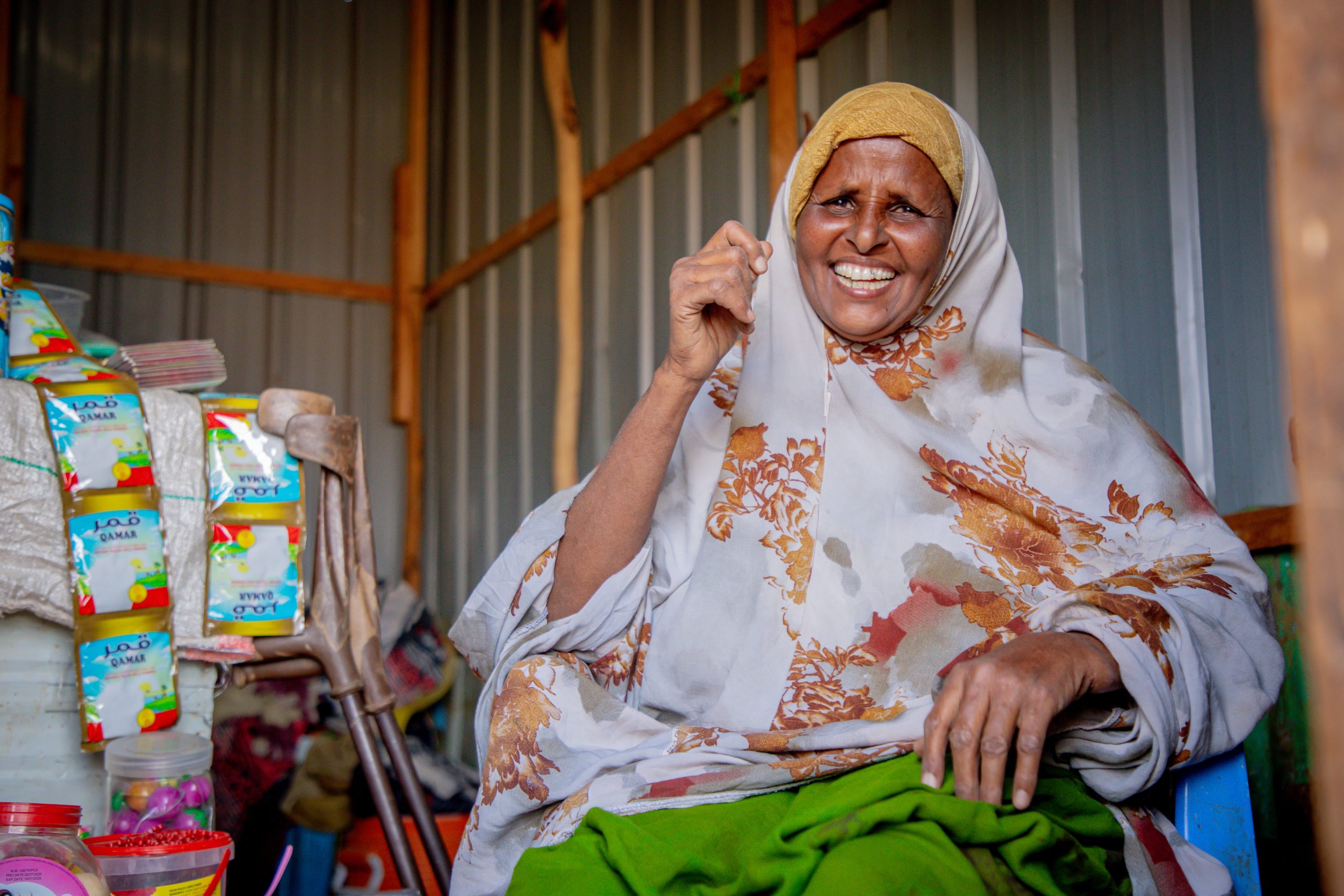
Habiba Adan Isack, a forty-year-old mother of two and a person living with a disability, is slowly rebuilding her life in the Ramadan 1 IDP settlement in Baidoa after enduring years of loss, drought, and displacement. Her story is one of resilience in the face of overwhelming hardship, marked by both deep personal tragedy and remarkable determination.
Habiba once lived in Qansahdhere District, where she and her husband relied on farming to sustain their family. Their land provided food and a modest income, allowing them to live with dignity. “Life in Qansahdhere was simple but good. We had land to farm, and we could feed our children from what we produced,” she recalls. Despite the challenges of rural life, the family remained stable and self-sufficient.
That stability was shattered when her husband passed away. Suddenly, Habiba found herself solely responsible for raising her two children. Living with a disability made daily tasks more difficult, yet she pushed forward, determined to continue farming and provide for her family. But as she struggled to cope with her loss, another crisis emerged. Repeated droughts devastated the region, destroying crops and drying up the land that had once sustained them.
“When the drought kept coming year after year, the land stopped producing. I tried to continue farming, but nothing was growing. I realized we could not survive there anymore,” she explains. With no harvest and no income, Habiba faced an impossible situation. Staying meant certain hardship; leaving meant uncertainty.
With courage and desperation, she made the difficult decision to leave her home in search of a better future. The journey to Baidoa was long and exhausting. With no access to proper transportation, Habiba and her children traveled by donkey cart, moving slowly from village to village over eight grueling days. They survived on the limited food and water they had carried, carefully rationed to last the entire journey.
“There were moments when the children were very tired and hungry, and I felt my strength fading too,” she says. “But I kept telling myself we had to keep going.” Traveling under the intense heat, through dusty, was especially challenging given her disability. She often needed to stop and rest, yet her determination never wavered. Her focus remained clear: reaching safety for the sake of her children.
When they finally arrived in Baidoa, they settled in the Ramadan 1 IDP camp, where many displaced families struggle to survive under harsh conditions. Life there was not easy. With no stable source of income, Habiba depended on occasional humanitarian aid and the kindness of neighbors. Meeting even the most basic needs food, clothing, and shelter, was a daily struggle.
“I used to wake up every morning worried about how I would feed my children,” she recalls. “There were days when I had nothing to give them, and that was the hardest part.”
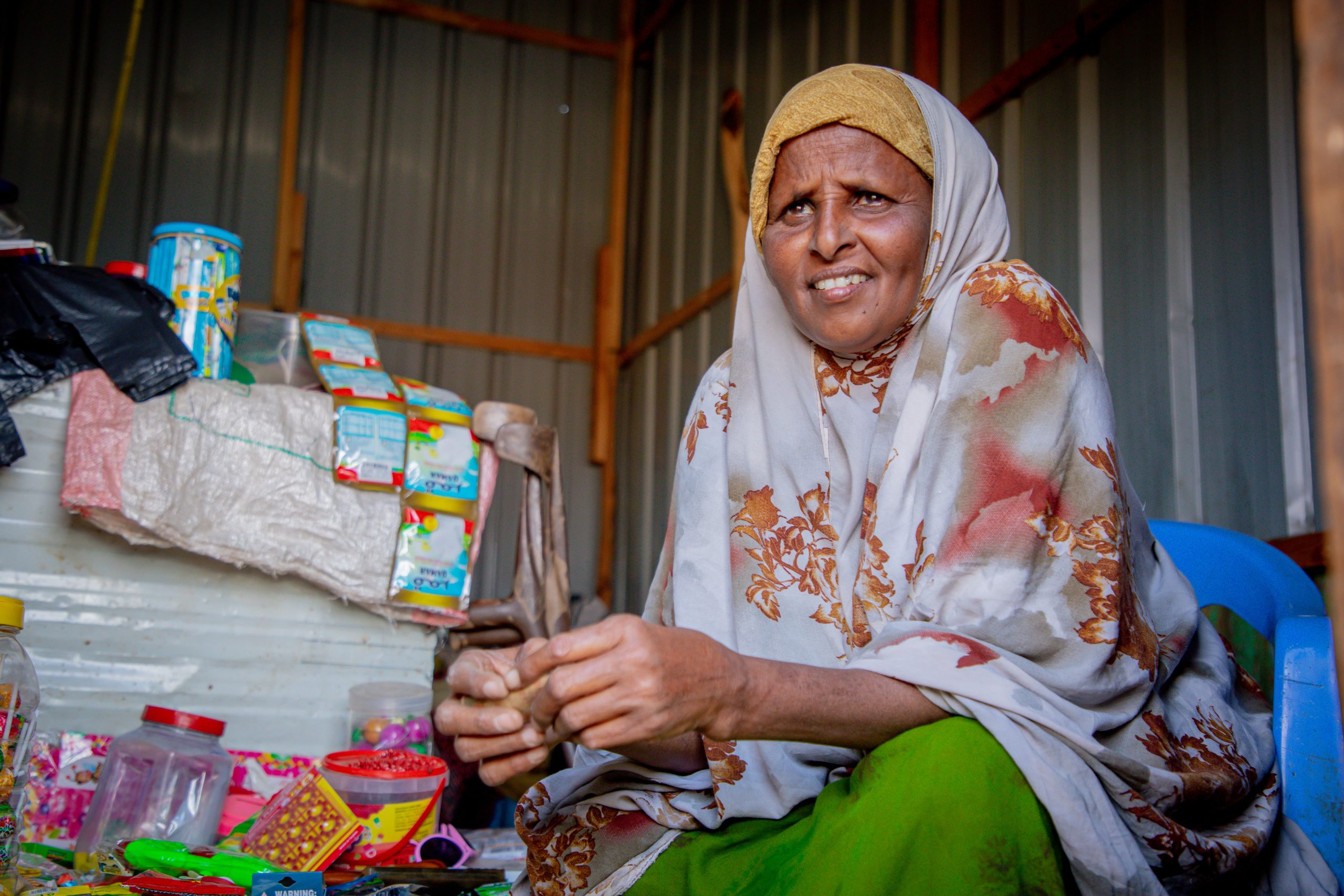
A turning point came when she was selected as a project participant of the Danwadaag HERBS project livelihood support program, funded by the UK in Somalia. Recognizing the vulnerability of female-headed households and persons with disabilities, the program provided Habiba with a small business grant to help her start an income-generating activity.
With this support, Habiba launched a small business, purchasing basic commodities such as food items and household goods to sell within the camp. Though small at first, the business began to grow steadily. Over time, it provided her with a reliable source of income, allowing her to support her children and restore a sense of stability in their lives.
“Before receiving this support, I worried every day about survival,” she says. “Now I have a small business that helps me earn income and care for my family. I feel hopeful again.”
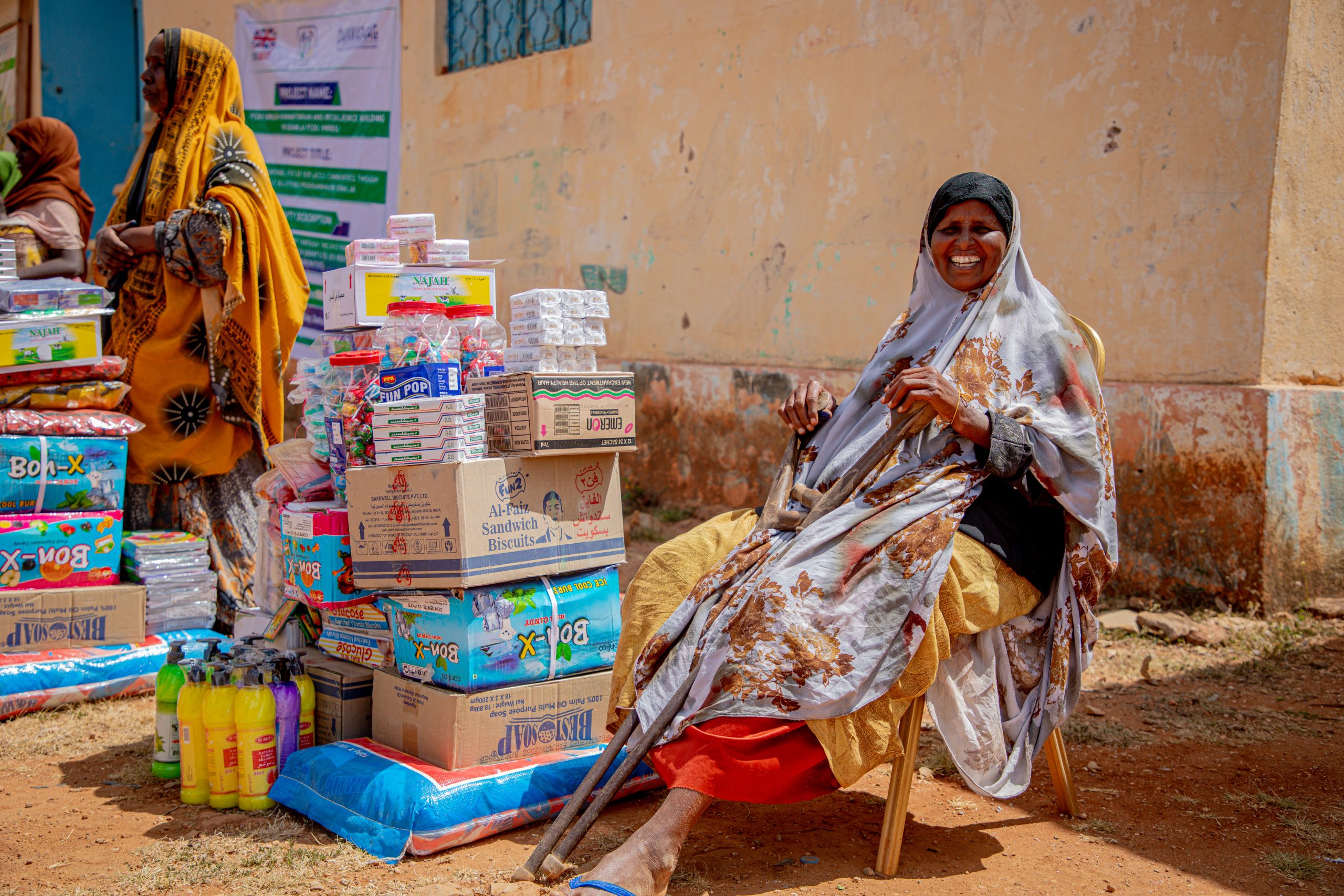
Today, Habiba continues to build her business step by step. She reinvests part of her earnings to expand her stock, gradually strengthening the sustainability of her livelihood. While challenges remain, she has regained a sense of purpose and independence.
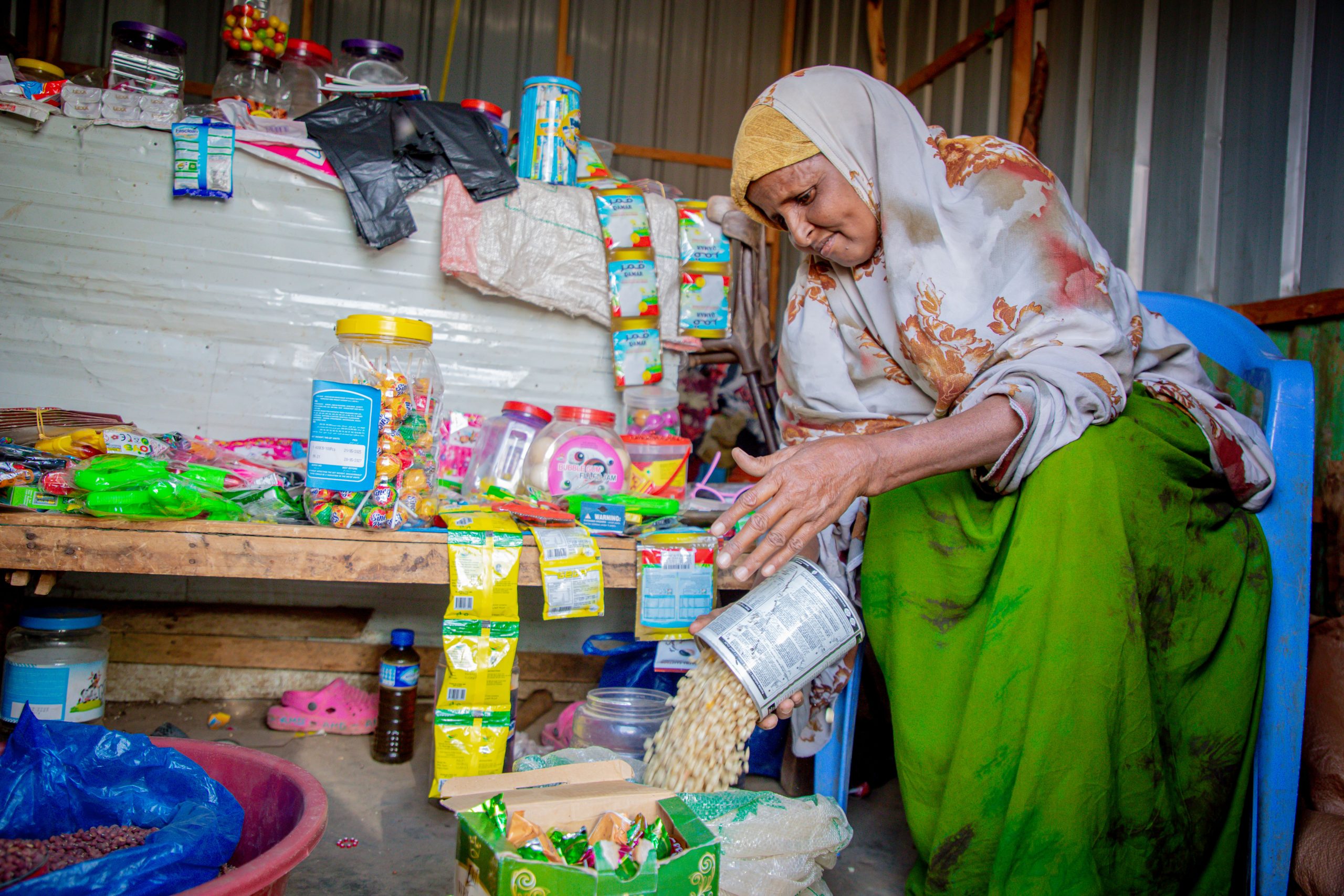
Her journey from a farmer to a displaced mother struggling to survive, to a small business owner rebuilding her life, reflects the strength and resilience of many women facing similar circumstances. Despite loss, displacement, and hardship, Habiba has found a way forward, driven by her determination to create a better future for her children.
“I still have challenges,” she says, “but now I have something to stand on. I believe my future, and my children’s future, can be better.